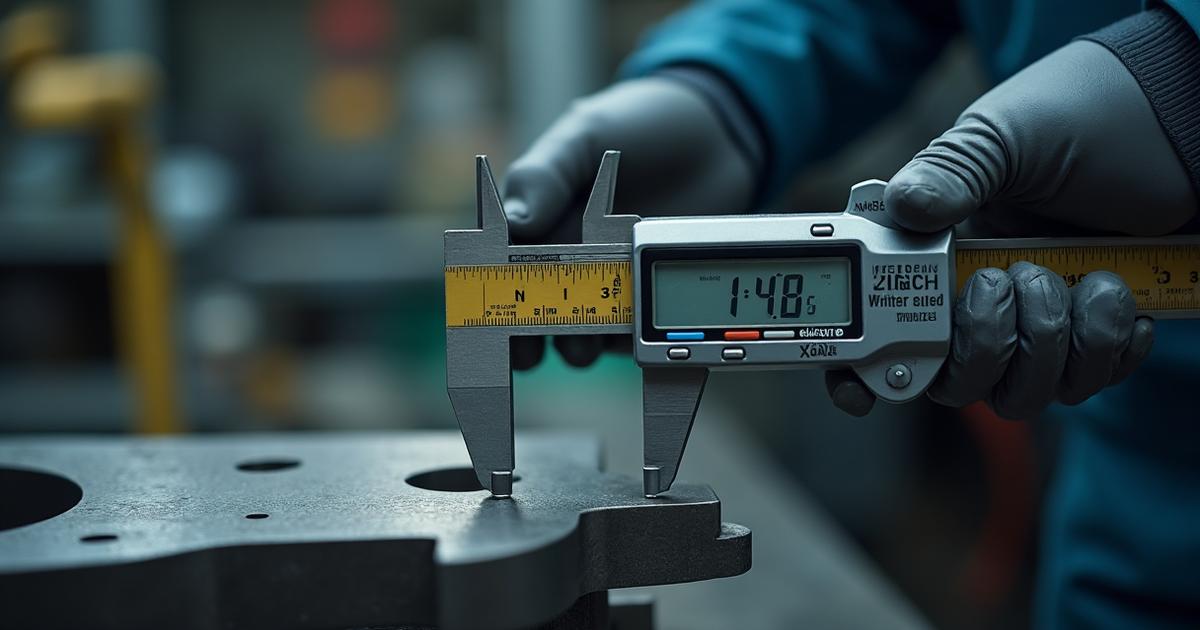
Depth Gauge: What It Is, Types & How to Use It
A depth gauge is a precision instrument used to measure the depth of holes, slots, recesses, and other features in materials. It's essential in machining, woodworking, and automotive repair.
What Is a Depth Gauge?
A depth gauge measures how deep a hole, groove, or recess extends below a reference surface. Unlike rulers that measure along a surface, depth gauges measure perpendicular to it.
Types of Depth Gauges
- Vernier depth gauge: Uses a Vernier scale for readings to 0.02 mm precision.
- Digital depth gauge: Electronic display for easy reading, typically 0.01 mm resolution.
- Dial depth gauge: Analog dial indicator for quick visual readings.
- Depth micrometer: Highest precision, readings to 0.001 mm.
- Tire tread depth gauge: Specialized for measuring tire tread remaining.
How to Use a Depth Gauge
- Clean the surface and the hole/recess to be measured.
- Place the base of the depth gauge flat on the reference surface.
- Lower the measuring rod into the hole until it touches the bottom.
- Lock the gauge and read the measurement.
- Record the depth with appropriate units (mm or inches).
Applications
- Machining and manufacturing quality control
- Automotive maintenance (tire tread, brake pad depth)
- Woodworking (mortise and tenon joints)
- Construction (anchor bolt hole depth)
- Dental and medical procedures